The project “Fact or fake? Constructions and functions of lost cities in Hellenistic-Roman Arkadia” is the first to jointly examine two closely intertwined topics: The actual degree of “abandonment” of selected Arkadian cities, and the interpretation and instrumentalisation of this (real or imagined) abandonment by Greco-Roman authors from the Hellenistic to the High Imperial period, i.e. approximately from the 3rd century BC to the 3rd century AD.
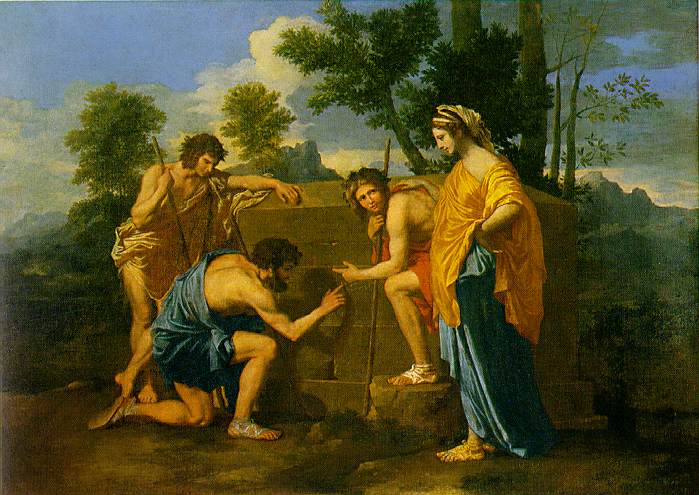
Ancient authors engaged with (constructed) Arkadian lost cities in diverse dimensions. The project explores the question of their influence on the emergence of the idealised image of Arkadia as an idyll, a question that is still being discussed. The project thus focuses on cross-cultural causal relationships whose origins can be seen in regional and temporal specifics. From approx. the 3rd century BC onwards, the bucolic poets, most notably Theocritus, laid the foundations for the conception of Arkadia as a utopian ideal. This image was idealised after Virgil as a place of longing for the urban bourgeoisie, ultimately free from spatial and temporal restrictions, and has been retained into modern times.
Tanja Scheer established a link between fiction and reality via “material monuments” in her investigation of the mythical colonisation activities of the Arkadians. Our project will examine Arkadian lost cities from this perspective and investigate their suitability as “material monuments” for locating the Homeric opus, which was considered historical by many in antiquity. The hypothesis is that such a link may have provoked such high expectations among writers and readers alike, that a confrontation with reality – contrasting with the heroic descriptions – inevitably led to disappointment. Consequently, Arkadian cities were considered abandoned. Against the backdrop of Heraclitean ideas of constant change, and in line with Herodotean understanding of history, it may have been seen as the only option to attribute former greatness to these cities: Since they were now small and insignificant, they must once have been great and powerful, just as Homer reports.
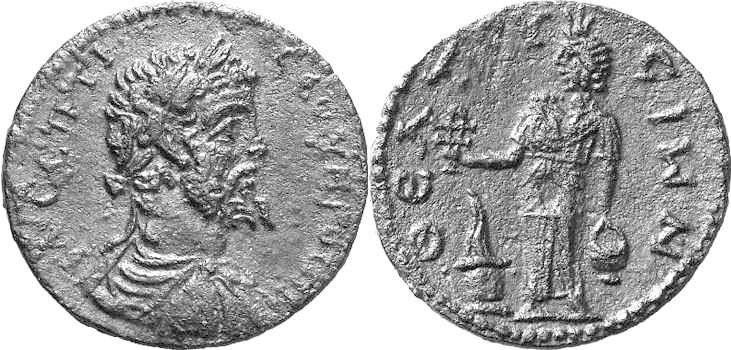
The project will examine the veracity of written accounts of abandoned Arkadian cities, using archaeological data generated by modern methods as a source. On the one hand, architectural structures, especially the chronologically often well-determinable construction or renovation of public buildings, provide information about the economic power of a city at a given time. On the other hand, archaeological artefacts, primarily ceramics, provide information about a city’s socio-economic activity and cultural integration. Another valuable source is represented by coins. Coin finds have hitherto been mentioned only in numerous individual studies. As a part of the project, they will be evaluated in the form of a synthesis, which is a novelty in numismatic research in Arkadia. This will provide insights into settlement continuity and shed light on the processes associated with the use of coins, including economic and political aspects.
Thus, for the first time, and in an interdisciplinary approach, the project will investigate the potential literary construction of lost cities in Arkadia. At present, the assumption of an entanglement of interpretation, knowledge, and perception cultures of authors and audience seems plausible.
From a cultural-historical perspective, it is also relevant to explore the social and media dynamics that arise from the construction and communication of narratives and that can still be observed today. In addition to written sources, visual sources are of particular importance, as their content is instrumentalised to influence a wide variety of social processes. This aspect is accounted for particularly through the numismatic analysis of coin images. From a diachronic perspective, researching ancient Arkadia can therefore contribute to our understanding of modern narratives of transformation processes, and to the development of new ways of dealing with such narratives.